
 ,
Agbor James Ayamba,
Ekili Betty Akuh,
Nkwelle Emmanuel Ebong,
Ebane Koubi Nadine,
Yiedjou Blessing Desiree Rebecca,
Elvis Tetuh Tendong,
Etone Carl Ngole,
Alusombom Godswill,
Mary Ashu Mbi
,
Agbor James Ayamba,
Ekili Betty Akuh,
Nkwelle Emmanuel Ebong,
Ebane Koubi Nadine,
Yiedjou Blessing Desiree Rebecca,
Elvis Tetuh Tendong,
Etone Carl Ngole,
Alusombom Godswill,
Mary Ashu Mbi
This study explores the relationship between vegetation quality and human encroachment in the habitat of the hippopotamus (Hippopotamus amphibius) at Mbam et Djerem National Park, Cameroon. As a critical habitat for diverse flora and fauna, the park faces increasing pressure from human activities, including agriculture, logging, and settlement expansion. Our research aim was to assess how these activities impact vegetation quality and subsequently affect hippopotamus populations. Research data collection was based on categorizing various methods of human encroachment. Our findings indicate that regions experiencing high levels of encroachment exhibited significant declines in vegetation quality, which may limit the availability of food sources for hippopotamuses. Additionally, we conducted interviews with local communities to understand their perceptions of wildlife and land use. The results reveal a complex interplay between conservation efforts and the socioeconomic needs of local populations. The vegetation quality revealed a significant association on photo-period X2 = 19.917 df=4 P=0.001, animals habitat X2 = 21.138 df=4 P=0.000, River-water quality X2 = 10.687 df=4 P=0.03, and animal behavior X2 = 19.912 df=4 P=0.001 respectively. Additionally, human encroachment into the animals habitat recorded a significant link on food resources r=0.195 P<0.05, animal behavior X2 = 3.063 df=4 P<0.05, and Conservation Measures X2 = 9.363 df=4 P<0.05 respectively. Also, fuel-wood gathering 50% recorded the highest encroachment threat, while poaching 38% and crop-farming 12% recorded the least threats respectively. This study emphasized the urgent need for integrated management strategies that balance human development and wildlife conservation to ensure the long-term survival of hippopotamus populations in Mbam et Djerem National Park. Our findings contribute to the broader discourse on habitat conservation in the face of anthropogenic pressures in Central Africa.
| Published in | International Journal of Natural Resource Ecology and Management (Volume 11, Issue 1) |
| DOI | 10.11648/j.ijnrem.20261101.14 |
| Page(s) | 35-43 |
| Creative Commons |
This is an Open Access article, distributed under the terms of the Creative Commons Attribution 4.0 International License (http://creativecommons.org/licenses/by/4.0/), which permits unrestricted use, distribution and reproduction in any medium or format, provided the original work is properly cited. |
| Copyright |
Copyright © The Author(s), 2026. Published by Science Publishing Group |
Human Encroachment, Hippopotamus, Wildlife, Local Population, Vegetation Quality
| [1] | Ambahe, R. et al. (2019). Ecological Assessment of Vegetation in Mbam et Djerem National Park. African Journal of Ecology. |
| [2] | Baker, S. J., et al. (2018). Ecotourism and Wildlife Conservation: A Case Study of Hippopotamuses in Africa. African Journal of Ecology. |
| [3] | Baker, S. J., et al. (2003). Hippopotamus Population Dynamics in African Wetlands. African Journal of Ecology. |
| [4] | Baldus, R. et al. (2008). Managing Human-Wildlife Conflicts in Africa. |
| [5] | Benayas, J. et al. (2009). "Ecological Restoration and the Recovery of Biodiversity." Ecological Applications. |
| [6] | Bennett, E. L., & Ruef, A. (2016). Community-Based Conservation: A Review of the Evidence. Conservation Letters. |
| [7] | Bennett, E. L. (2004). Integrating Conservation and Development: A Global Perspective. Conservation Biology. |
| [8] | Boko, M. et al. (2006). Biodiversity of Mbam et Djerem National Park: A Conservation Perspective. Cameroon Biodiversity Journal. |
| [9] | Bongers, F., et al. (2009). The Importance of Canopy Structure for Light and Plant Growth. Journal of Tropical Ecology. |
| [10] | Boulton, A. J., et al. (2010). Nutrient Cycling in Freshwater Ecosystems: A Review. Freshwater Biology. |
| [11] | Braun, V., & Clarke, V. (2006). Using Thematic Analysis in Psychology. Qualitative Research in Psychology, 3(2), 77-101. |
| [12] | Bruner, A. G., et al. (2015). Effectiveness of Parks in Protecting Tropical Biodiversity. Science, 328(5982), 704-707. |
| [13] | Chardonnet, P. (2002). Conservation of African Hippopotamus Populations. Wildlife Conservation Society. |
| [14] | Chen, S. et al. (2017). "Impact of Human Activities on Wildlife." Conservation Biology. |
| [15] | Conway, A. (2011). "Hippopotamus and Agriculture: A Conflict of Interests." African Journal of Ecology. |
| [16] | Creswell, J. W. (2014). Research Design: Qualitative, Quantitative, and Mixed Methods Approaches. Sage Publications. |
| [17] | Cromsigt, J. P. G. M., et al. (2013). The Impact of Human Disturbance on Hippopotamus Behavior in Protected Areas. African Journal of Ecology. |
| [18] | Davis, A. et al. (1994). Vegetation Dynamics in Central Africa. Ecological Studies. |
| [19] | Denzin, N. K. (1978). The Research Act: A Theoretical Introduction to Sociological Methods. McGraw-Hill. |
| [20] | Djuikouo, M. et al. (2014). Flora of Mbam et Djerem National Park. Journal of Tropical Botany. |
| [21] | Duncan, P. et al. (2006). The Hippopotamus in Africa: Ecology and Conservation. African Wildlife Foundation. |
| [22] | Estes, J. A., et al. (2011). Trophic Downgrading of Planet Earth. Science, 333(6040), 301-306. |
| [23] | Fahrig, L. (2003). Effects of Habitat Fragmentation on Biodiversity. Annual Review of Ecology, Evolution, and Systematics. |
| [24] | Field, A. (2013). Discovering Statistics Using IBM SPSS Statistics. Sage Publications. |
| [25] | Fischer, J., et al. (2014). Biodiversity and Food Production: A Review of the Impacts of Agricultural Land Use on Biodiversity. Proceedings of the Royal Society B: Biological Sciences. |
| [26] | Fowler, F. J. (2014). Survey Research Methods. Sage Publications. |
| [27] | Garrity, D. P., et al. (2010). Sustainable Land Management in the Tropics: A Review of the Evidence. Food and Agriculture Organization. |
| [28] | Grooten, M., et al. (2014). The Impact of Agriculture on Wildlife Habitat. Journal of Wildlife Management. |
| [29] | Gurnell, A., et al. (2016). Riparian Vegetation and River Dynamics: A Review. River Research and Applications. |
| [30] | Hazzah, L., et al. (2009). The Role of Local Communities in Wildlife Conservation: A Case Study of Hippopotamus in Kenya. Conservation Biology. |
| [31] | Higgins, S. I., et al. (2000). Foraging Behavior of Herbivores: The Role of Food Availability. Journal of Wildlife Management. |
| [32] | Hoffman, M. et al. (2010). "Hippopotamus Amphibius." IUCN Red List of Threatened Species. |
| [33] | Holt, R. D., et al. (2008). The Role of Habitat Quality in Predator-Prey Interactions. Ecology Letters. |
| [34] | Huang, H., et al. (2020). GIS Applications in Wildlife Conservation: A Review. Journal of Wildlife Management. |
| [35] | Kamga, F. (2009). Climate and Vegetation in Central Cameroon. Cameroon Climate Review. |
| [36] | Kouadio, L. et al. (2013). Wetland Ecosystems in Mbam et Djerem National Park. Journal of Wetland Ecology. |
| [37] | Krausman, P. R., et al. (2006). Foraging Behavior of Hippopotamuses in Relation to Habitat Alteration. Journal of Wildlife Management. |
| [38] | Kremen, C., et al. (2012). Agricultural Ecosystem Services: Ecological and Economic Perspectives. Ecology and Society. |
| [39] | Krippendorff, K. (2004). Content Analysis: An Introduction to Its Methodology. Sage Publications. |
| [40] | Kumar, L. et al. (2016). "Vegetation Health Assessment Using NDVI." Remote Sensing. |
| [41] | Kumar, M., et al. (2015). Socioeconomic Drivers of Fuel-Wood Extraction in Forest Communities. Journal of Environmental Management. |
| [42] | Lindsey, P. A., et al. (2020). Funding to protected areas cannot manage the growing threats. Frontiers in Ecology and Evolution. |
| [43] | Lindsey, P. A. et al. (2013). "Conservation in Sub-Saharan Africa: Integrated Approaches." Frontiers in Ecology and the Environment. |
| [44] | Magurran, A. E. (1988). Ecological Diversity and Its Measurement. Croom Helm. |
| [45] | Mason, J., et al. (2018). Water Resources and Wildlife: Balancing Human Needs and Ecological Integrity. Water Resources Management. |
| [46] | MINFOF. (2007). Protected Areas of Cameroon: An Overview. Ministry of Forestry and Wildlife, Cameroon. |
| [47] | Mokoko, D. (2018). Climate Change and Its Impact on Biodiversity in Cameroon. Environmental Science Journal. |
| [48] | Mueller-Dombois, D., & Ellenberg, H. (1974). Aims and Methods of Vegetation Ecology. John Wiley & Sons. |
| [49] | Neba, A. (1999). Geography of Cameroon: A Comprehensive Study. University of Yaoundé Press. |
| [50] | Ngwa, D. et al. (2015). Climate Variability and Ecological Impacts in Cameroon. Climate Research Journal. |
| [51] | Nzooh, M. et al. (2010). Wildlife Conservation in Mbam et Djerem National Park. Journal of Wildlife Management. |
| [52] | Ogutu, J. O. et al. (2011). "Changes in Wildlife Populations in Kenya." Ecological Indicators. |
| [53] | Richardson, J. S., & Mackenzie, M. L. (2016). Riparian Buffer Zones: Their Importance for Water Quality and Wildlife. Environmental Management. |
| [54] | Ripple, W. J., et al. (2016). Bushmeat Hunting and the Future of Wildlife Conservation in Africa. Conservation Biology. |
| [55] | Rogers, T. et al. (2015). "Urbanization and Its Impact on Wildlife." Urban Ecosystems. |
| [56] | Sayers, J., et al. (2016). Social Behavior of Hippopotamuses in Relation to Environmental Factors. Ethology. |
| [57] | Schwerdtle, T. N., et al. (2018). Policy Frameworks for Biodiversity Conservation in the Context of Agriculture. Environmental Science & Policy. |
| [58] | Shaltout, K. H., & El-Bana, M. I. (2014). Photoperiod and Plant Phenology: A Review. Journal of Environmental Biology. |
| [59] | Shrestha, S., et al. (2014). Forest Degradation, Fuel-Wood Consumption, and Its Impacts on Biodiversity in Nepal. Biodiversity and Conservation. |
| [60] | Sinsin, B. et al. (2005). Savanna Ecosystems in West and Central Africa. African Ecology Review. |
| [61] | Smith, V. H., et al. (1999). Eutrophication: Causes, Consequences, and Controls in Aquatic Ecosystems. Limnology and Oceanography. |
| [62] | Tchamba, M. (1996). The Ecology of the Hippopotamus in Cameroon. African Zoology. |
| [63] | Tchamou, N. E., et al. (2017). The Impact of Fuel-Wood Collection on Forest Degradation in West Africa. Forest Ecology and Management. |
| [64] | Thompson, D. et al. (2018). "The Impact of Habitat Loss on Hippopotamus Populations." Journal of Wildlife Management. |
| [65] | Turner, W., et al. (2015). Free and Open Access Satellite Data Are Key to Biodiversity Conservation. Nature Ecology & Evolution. |
| [66] | Zar, J. H. (2010). Biostatistical Analysis. Pearson. |
APA Style
Maurice, M. E., Ayamba, A. J., Akuh, E. B., Ebong, N. E., Nadine, E. K., et al. (2026). The Impact of Human Encroachment in the Habitat of Hippopotamus (Hippopotamus amphibious) in Mbam et Djerem National Park, Cameroon. International Journal of Natural Resource Ecology and Management, 11(1), 35-43. https://doi.org/10.11648/j.ijnrem.20261101.14
ACS Style
Maurice, M. E.; Ayamba, A. J.; Akuh, E. B.; Ebong, N. E.; Nadine, E. K., et al. The Impact of Human Encroachment in the Habitat of Hippopotamus (Hippopotamus amphibious) in Mbam et Djerem National Park, Cameroon. Int. J. Nat. Resour. Ecol. Manag. 2026, 11(1), 35-43. doi: 10.11648/j.ijnrem.20261101.14
AMA Style
Maurice ME, Ayamba AJ, Akuh EB, Ebong NE, Nadine EK, et al. The Impact of Human Encroachment in the Habitat of Hippopotamus (Hippopotamus amphibious) in Mbam et Djerem National Park, Cameroon. Int J Nat Resour Ecol Manag. 2026;11(1):35-43. doi: 10.11648/j.ijnrem.20261101.14
@article{10.11648/j.ijnrem.20261101.14,
  author = {Melle Ekane Maurice and Agbor James Ayamba and Ekili Betty Akuh and Nkwelle Emmanuel Ebong and Ebane Koubi Nadine and Yiedjou Blessing Desiree Rebecca and Elvis Tetuh Tendong and Etone Carl Ngole and Alusombom Godswill and Mary Ashu Mbi},
  title = {The Impact of Human Encroachment in the Habitat of Hippopotamus (Hippopotamus amphibious) in Mbam et Djerem National Park, Cameroon},
  journal = {International Journal of Natural Resource Ecology and Management},
  volume = {11},
  number = {1},
  pages = {35-43},
  doi = {10.11648/j.ijnrem.20261101.14},
  url = {https://doi.org/10.11648/j.ijnrem.20261101.14},
  eprint = {https://article.sciencepublishinggroup.com/pdf/10.11648.j.ijnrem.20261101.14},
  abstract = {This study explores the relationship between vegetation quality and human encroachment in the habitat of the hippopotamus (Hippopotamus amphibius) at Mbam et Djerem National Park, Cameroon. As a critical habitat for diverse flora and fauna, the park faces increasing pressure from human activities, including agriculture, logging, and settlement expansion. Our research aim was to assess how these activities impact vegetation quality and subsequently affect hippopotamus populations. Research data collection was based on categorizing various methods of human encroachment. Our findings indicate that regions experiencing high levels of encroachment exhibited significant declines in vegetation quality, which may limit the availability of food sources for hippopotamuses. Additionally, we conducted interviews with local communities to understand their perceptions of wildlife and land use. The results reveal a complex interplay between conservation efforts and the socioeconomic needs of local populations. The vegetation quality revealed a significant association on photo-period X2 = 19.917 df=4 P=0.001, animals habitat X2 = 21.138 df=4 P=0.000, River-water quality X2 = 10.687 df=4 P=0.03, and animal behavior X2 = 19.912 df=4 P=0.001 respectively. Additionally, human encroachment into the animals habitat recorded a significant link on food resources r=0.195 P2 = 3.063 df=4 P2 = 9.363 df=4 P<0.05 respectively. Also, fuel-wood gathering 50% recorded the highest encroachment threat, while poaching 38% and crop-farming 12% recorded the least threats respectively. This study emphasized the urgent need for integrated management strategies that balance human development and wildlife conservation to ensure the long-term survival of hippopotamus populations in Mbam et Djerem National Park. Our findings contribute to the broader discourse on habitat conservation in the face of anthropogenic pressures in Central Africa.},
 year = {2026}
}
TY  - JOUR
T1  - The Impact of Human Encroachment in the Habitat of Hippopotamus (Hippopotamus amphibious) in Mbam et Djerem National Park, Cameroon
AU  - Melle Ekane Maurice
AU  - Agbor James Ayamba
AU  - Ekili Betty Akuh
AU  - Nkwelle Emmanuel Ebong
AU  - Ebane Koubi Nadine
AU  - Yiedjou Blessing Desiree Rebecca
AU  - Elvis Tetuh Tendong
AU  - Etone Carl Ngole
AU  - Alusombom Godswill
AU  - Mary Ashu Mbi
Y1  - 2026/02/24
PY  - 2026
N1  - https://doi.org/10.11648/j.ijnrem.20261101.14
DO  - 10.11648/j.ijnrem.20261101.14
T2  - International Journal of Natural Resource Ecology and Management
JF  - International Journal of Natural Resource Ecology and Management
JO  - International Journal of Natural Resource Ecology and Management
SP  - 35
EP  - 43
PB  - Science Publishing Group
SN  - 2575-3061
UR  - https://doi.org/10.11648/j.ijnrem.20261101.14
AB  - This study explores the relationship between vegetation quality and human encroachment in the habitat of the hippopotamus (Hippopotamus amphibius) at Mbam et Djerem National Park, Cameroon. As a critical habitat for diverse flora and fauna, the park faces increasing pressure from human activities, including agriculture, logging, and settlement expansion. Our research aim was to assess how these activities impact vegetation quality and subsequently affect hippopotamus populations. Research data collection was based on categorizing various methods of human encroachment. Our findings indicate that regions experiencing high levels of encroachment exhibited significant declines in vegetation quality, which may limit the availability of food sources for hippopotamuses. Additionally, we conducted interviews with local communities to understand their perceptions of wildlife and land use. The results reveal a complex interplay between conservation efforts and the socioeconomic needs of local populations. The vegetation quality revealed a significant association on photo-period X2 = 19.917 df=4 P=0.001, animals habitat X2 = 21.138 df=4 P=0.000, River-water quality X2 = 10.687 df=4 P=0.03, and animal behavior X2 = 19.912 df=4 P=0.001 respectively. Additionally, human encroachment into the animals habitat recorded a significant link on food resources r=0.195 P2 = 3.063 df=4 P2 = 9.363 df=4 P<0.05 respectively. Also, fuel-wood gathering 50% recorded the highest encroachment threat, while poaching 38% and crop-farming 12% recorded the least threats respectively. This study emphasized the urgent need for integrated management strategies that balance human development and wildlife conservation to ensure the long-term survival of hippopotamus populations in Mbam et Djerem National Park. Our findings contribute to the broader discourse on habitat conservation in the face of anthropogenic pressures in Central Africa.
VL  - 11
IS  - 1
ER  -
Department of Forestry and Wildlife, University of Buea, Buea, Cameroon
Department of Forestry and Wildlife, University of Buea, Buea, Cameroon
Department of Environmental Science, University of Buea, Buea, Cameroon
Department of Environmental Science, University of Buea, Buea, Cameroon
Department of Environmental Science, University of Buea, Buea, Cameroon
Department of Environmental Science, University of Buea, Buea, Cameroon
Department of Environmental Science, University of Buea, Buea, Cameroon
Department of Environmental Science, University of Buea, Buea, Cameroon
Department of Environmental Science, University of Buea, Buea, Cameroon
Department of Environmental Science, University of Buea, Buea, Cameroon
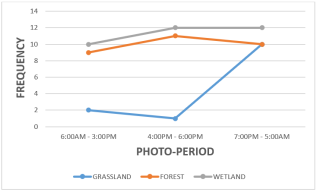
Figure 2. Vegetation Quality and Photo-period.
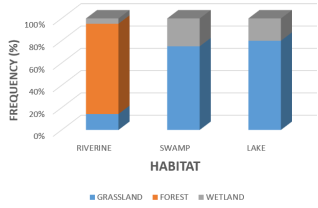
Figure 3. Vegetation and Habitat.
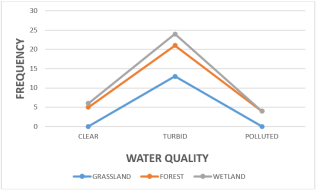
Figure 4. Vegetation and Water Quality.
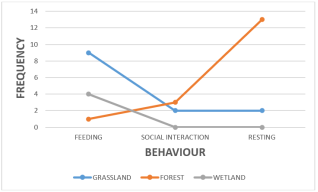
Figure 5. Vegetation and Animal Behavior.
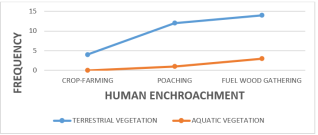
Figure 6. Human Encroachment and Food Resources.
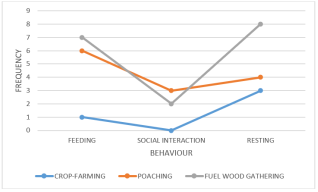
Figure 7. Human Encroachment and Animal Behaviour.
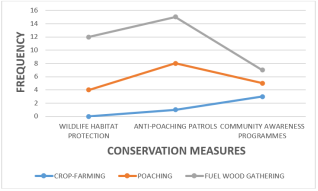
Figure 8. Human Encroachment and Conservation Measures.
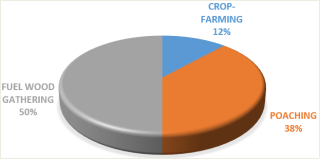
Figure 9. Human encroachment threats.



 Share This Article
 Twitter
 Linked In
 Facebook
 Copy
Copy Download